Email: inquiry@agrowgroup.com

 English
 Views: 135 Author: Jana Publish Time: 2023-01-13 Origin: Site


All succulent parts of the plant, including fruiting pedicels, leaves, petioles, tendrils, shoots, and berries, may be attacked. However, lesions on shoots and berries are the most common and obvious.
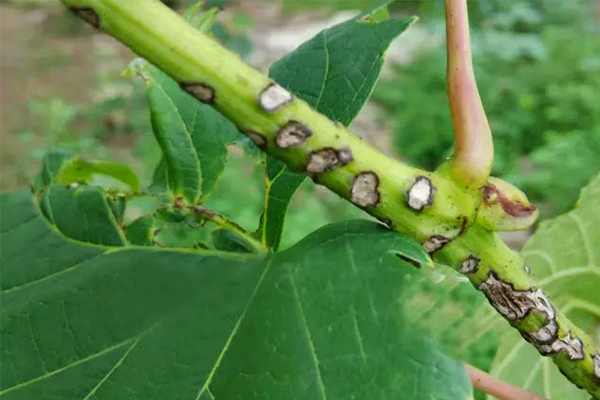
Symptoms on juicy shoots first appear as numerous small, round and red spots. The spots then enlarge, become sunken, and produce lesions with gray centers and round or angular margins. Dark reddish-brown to purplish-black margins eventually surround the lesions. The lesions may coalesce, resulting in wilted or dead shoots. The edge of the lesion may form a slightly elevated area. Infected areas may crack, causing the shoot to become brittle.
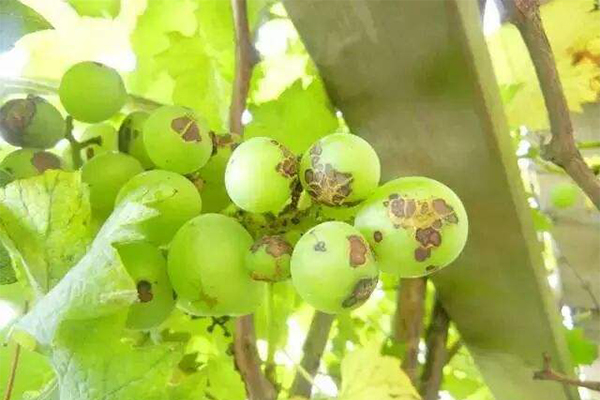
Anthracnose lesions on shoots may be confused with hail damage; however, unlike hail damage, the anthracnose fungus causes wounds with raised, black edges.
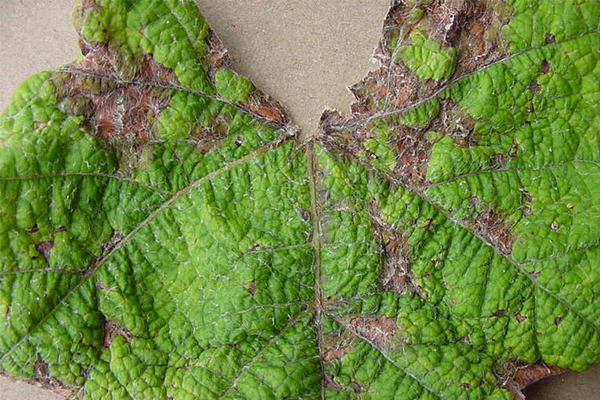
Leaf spots are usually numerous and develop in a similar manner to those on shoots. Eventually, they become round with a gray center and brown to black margins with rounded or angular edges. The necrotic center of the lesion often falls out, creating the appearance of a shooting hole. Younger leaves are more susceptible to infection than older leaves. When the veins are affected, especially on young leaves, the lesions prevent normal development, resulting in deformed or completely dry or burned leaves. Lesions may cover the entire leaf or appear mainly along the leaf veins.